

This is literally the "birthday or descent of mother Ganges – Ganga Ma". Throughout india this festival lasts ten days beginning on the Amavasya (dark moon night) and going through to the dasami tithi (tenth phase of the Moon, the day before Pandava Nirjal Ekadasi)

"Festivals connected with rivers are essentially bathing festivals. Ganga Dussehra is celebrated on the tenth day of Jyeshtha. River Ganga is worshipped as a mother as well as a Goddess, particularly by people of Uttara Pradesh, Bihar, and Bengal through which the river flows. On this day, if a devotee is unable to visit and bathe in the river Ganga, then Ganga jal (water) kept in most Hindu homes is used for purification. A bath in the river is said to purify the bather of all sins. The Ganga is revered all over India even in places far from its course.
Initially, river Ganga flowed in the heavens. She was brought down to earth by the severe penances of the sage Bhagiratha and that is why she is also called Bhagirathi. According to the story, of the descent of the Ganga, once a number of demons were harassing the hermits by disturbing them in their ascetic duties. During the day, they would be chased into the ocean. But in the darkness of the night, they would emerge from the ocean and start harassing the hermits again. In desperation the hermits appealed to Rishi Agastya. Agastya, known for his gastronomic powers, drank all the water of the ocean. Though this was done in good faith, it resulted in depriving the world of the water needed for sustenance and the earth became parched and dry. Bhagiratha brought this drought to and end.
According to the legend, King Sagara of the Ikshvaku dynasty ruling at Ayodhya in Uttar Pradesh had two queens, Keshani and Sumati, but neither had a child. Sagara performed severe austerities before his wives could produce sons. But whereas Keshani gave birth to a son called Asmajas, Sumati bore 60,000 sons. Sagara performed the Ashwamedha sacrifice to declare his suzerainty over the neighbouring kingdoms. According to the prevalent custom, the sacrificial horse was let loose and allowed to wander into the neighbouring kingdoms. If the horse was caught, a battle ensued and the outcome decided the winner. The 60,000 sons of Sagara were following the horse when they saw him enter a cavern where sage Kapila was meditating. Not seeing the horse in the cavern, they presumed that Kapila had captured it. They did not kill Kapila as he was a sage but they started disturbing his meditations. Annoyed at being disturbed, Kapila with a curse burnt the 60,000 sons of Sagara.
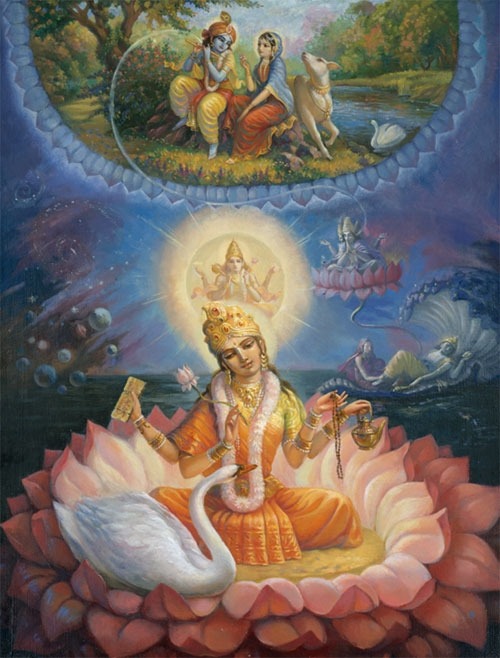
Time passed and later Bhagiratha, the great grandson of Sagara, chanced to come across the bones of his dead ancestors. He wanted to perform the shraddha of his ancestors but there was no water available for the ceremony. Agastya having drunk all the waters of the ocean, the country was passing through a severe drought. Bhagiratha prayed to Brahma, the Creator, to end the drought. Brahma asked him to pray to Vishnu, the Preserver, to allow the heavenly Ganga, issuing from His big toe, to

